Blog

Law firms are one of the highest-margin SME verticals a telecom operator can sell into. They are not price-sensitive the way retail or hospitality is. They are value-sensitive. When a managing partner sees how much billable revenue the current phone system is losing, price becomes a secondary conversation.
But legal is also a vertical where a bad pitch fails fast. Partners are trained to spot vague claims. They will not sit through a demo of features they do not care about. The BD reps who close law firm deals are the ones who walk in already understanding how a firm makes money, where revenue leaks, and what the compliance stakes are.
This is the playbook. Four things a law firm cares about, how to raise each one in the discovery call, which part of the Digital Tide platform to show, and the objection you will get every time.

What the firm cares about. According to the Legal Trends Report, lawyers spend only 2.5 hours of their working day on billable tasks. The rest goes to admin, communication, and time they never log. The single biggest leak is the unlogged call — an attorney takes fifteen minutes from a client on the drive home, means to log it, forgets by morning. Across eight attorneys and a working week, that is twenty billable hours quietly written off.
How to sell it. Open the discovery call with this question:
How does the firm currently log billable time from phone calls?
If the answer involves attorneys writing it down at end of day, you have the pitch. That firm is losing revenue every week and the managing partner probably suspects it but has no way to prove it.
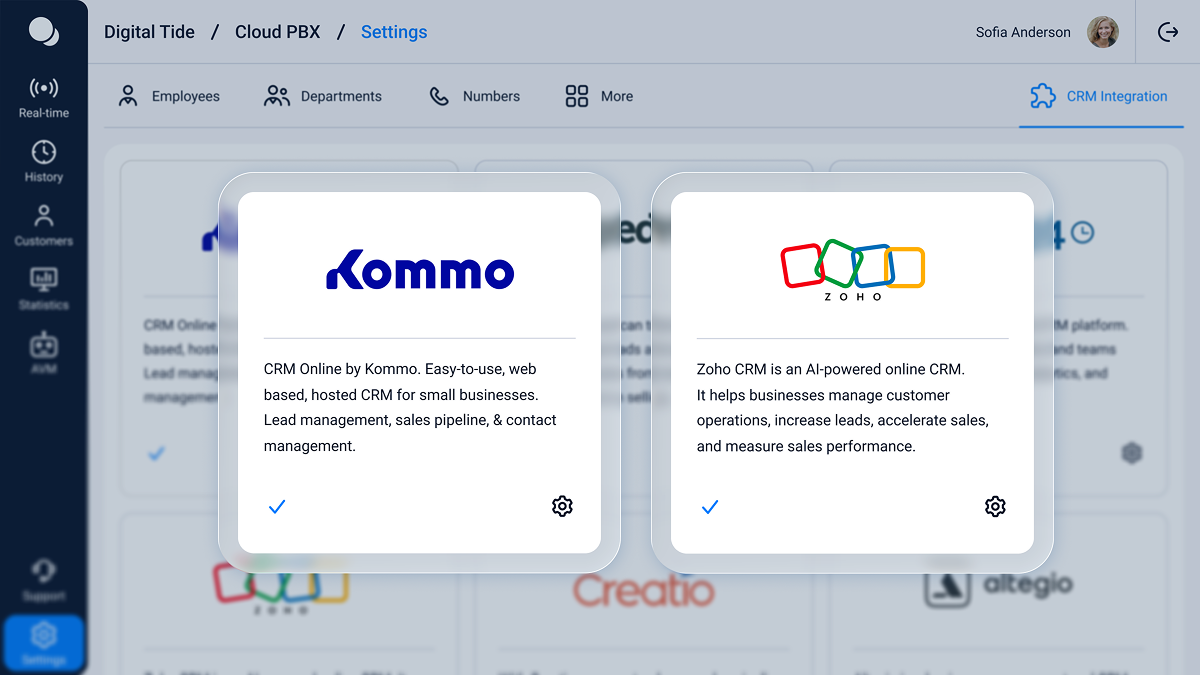
Pull up the CRM integration screen on your laptop. Digital Tide integrates natively with Kommo, Pipedrive, Salesforce, and most CRM systems firms use for intake and matter management. Every call, incoming, outgoing, missed, is logged against the client record automatically. Duration, timestamp, which attorney handled it, whether it was returned.
Then run the math out loud. A ten-attorney firm billing at $250 an hour that recovers one billable hour per attorney per week is looking at $130,000 a year they were not capturing before. Say the number. Watch the room shift.
The objection. Does it work with the CRM we already use? If it is on the native list, integration is a settings toggle. If not, the API handles it. Either way, the answer is yes. Do not promise a timeline unless you have checked with the Digital Tide integration team first.
What the firm cares about. Attorneys work from three places: the office, the courthouse, and everywhere else. Being reachable used to mean handing out a personal mobile number to key clients. That blurs the professional line and, more importantly, moves privileged client communication off the firm's official channels. That is a real compliance exposure, and partners know it.
How to sell it. Ask this in the discovery call:
What happens when a client calls the office and the attorney they need is in court?
If the answer is "the receptionist takes a message and emails it," you have the pitch. The firm is losing time-sensitive client communication every single day.
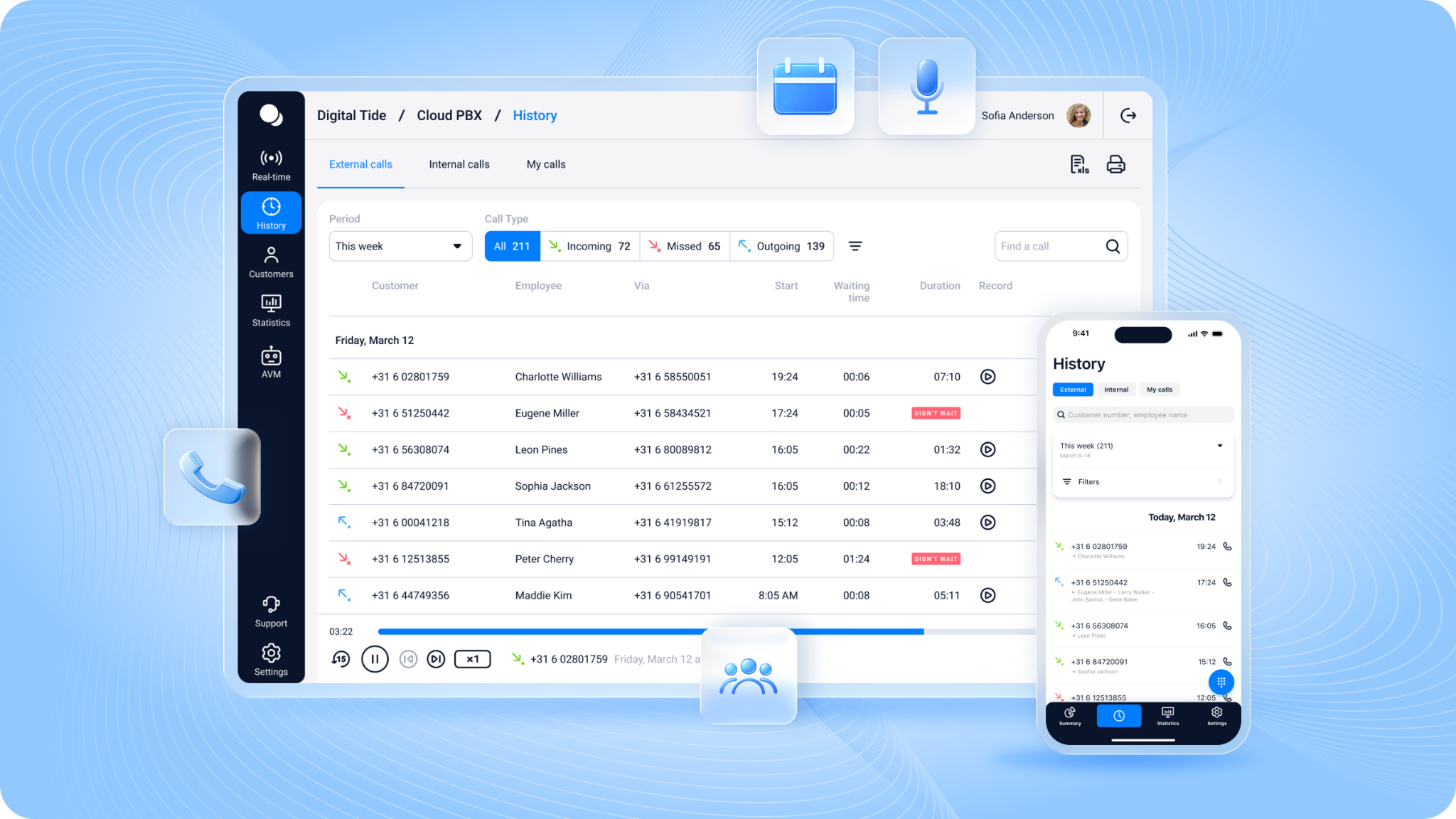
Show the mobile app. An attorney makes a call from Digital Tide's mobile app on their personal phone, and the client sees the firm's office number. Voicemails route to the firm's system. Recordings are captured under the firm's account, not scattered across seven personal devices.

What the firm cares about. Client disputes hinge on what was said. Notes taken during a call are a lawyer's word against the client's. Recordings are evidence.
Beyond disputes, firms operating under POPIA in South Africa, GDPR in the EU, PDPPL in Qatar, or the equivalent frameworks in other markets need auditable proof of how privileged communication is handled. Regulators do not ask to hear the recording. They ask for the audit trail.
How to sell it. Ask this in the discovery call:
Is the firm recording client calls today, and where are the recordings stored?
This one is important — it surfaces the compliance conversation without you leading with regulation, which partners often find patronising when it comes from a telco.
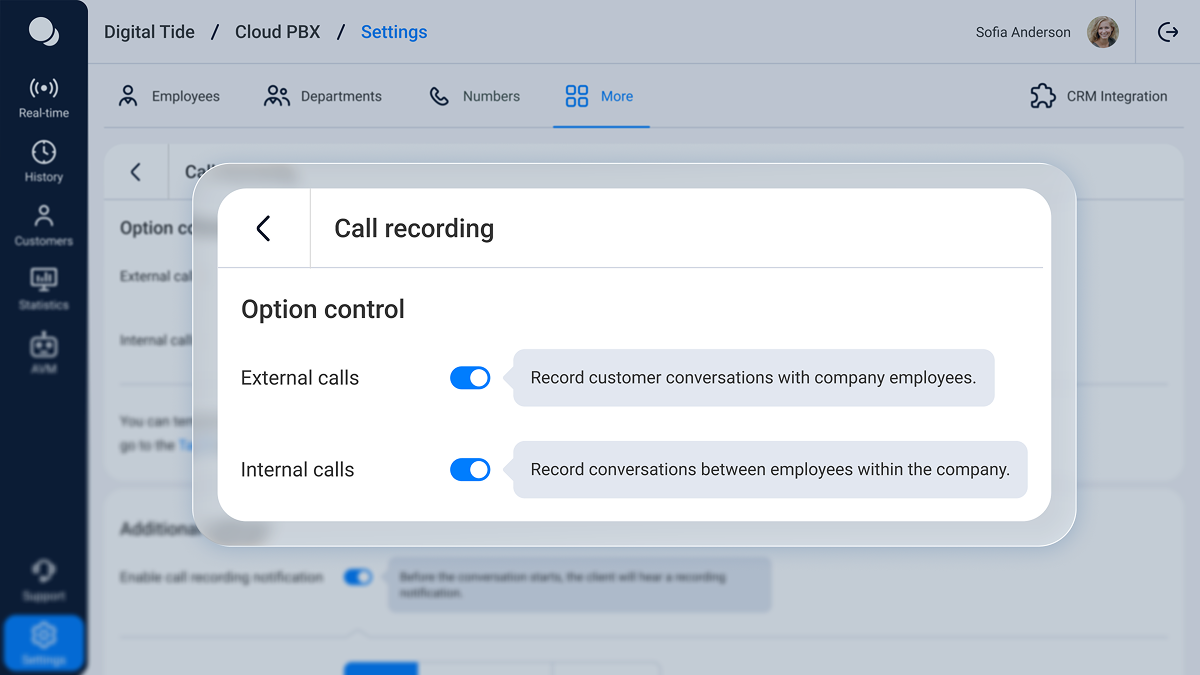
Show the call recording settings screen. Digital Tide's controls let the firm define policy at the system level: record all external calls, record only calls with specific clients, or record on demand. Recordings are encrypted at rest and stored in the firm's tenant. The system plays a notification message before recording begins, which handles two-party consent requirements in most jurisdictions.
Then flag the audit logs. Admin logs show who accessed which recording, when, and what they did with it. That is the paperwork a compliance officer needs when a regulator asks.
Business continuity is worth adding in markets with unstable infrastructure. If the office loses power or connectivity, calls automatically redirect to attorneys' mobile devices. In markets where load-shedding or fiber cuts are weekly, this is not a nice-to-have; it is the whole reason to switch. Lead with this when selling in South Africa, Nigeria, Pakistan, or anywhere the power is unreliable.
The objection. Where exactly are the recordings stored, and who has access? Know the answer for your specific deployment before the call. If you are hosting locally, name the data center. If Digital Tide is hosting for you, know the region. Partners will ask this, and a vague answer kills trust.
What the firm cares about. Most managing partners cannot tell you, right now, how many client calls the firm missed yesterday. They can guess. They cannot count. This is the pitch that lands with partners who run the firm as a business.
How to sell it. Ask this in the discovery call:
How many client calls does the firm miss outside office hours?
Most firms have no idea. That itself is the opening.
Show the real-time monitoring dashboard. The firm's operations manager sees live call activity across every office: incoming calls, missed calls, average pickup time, which attorneys are on calls, which are available. The service level metric shows the percentage of client calls answered within the target time.
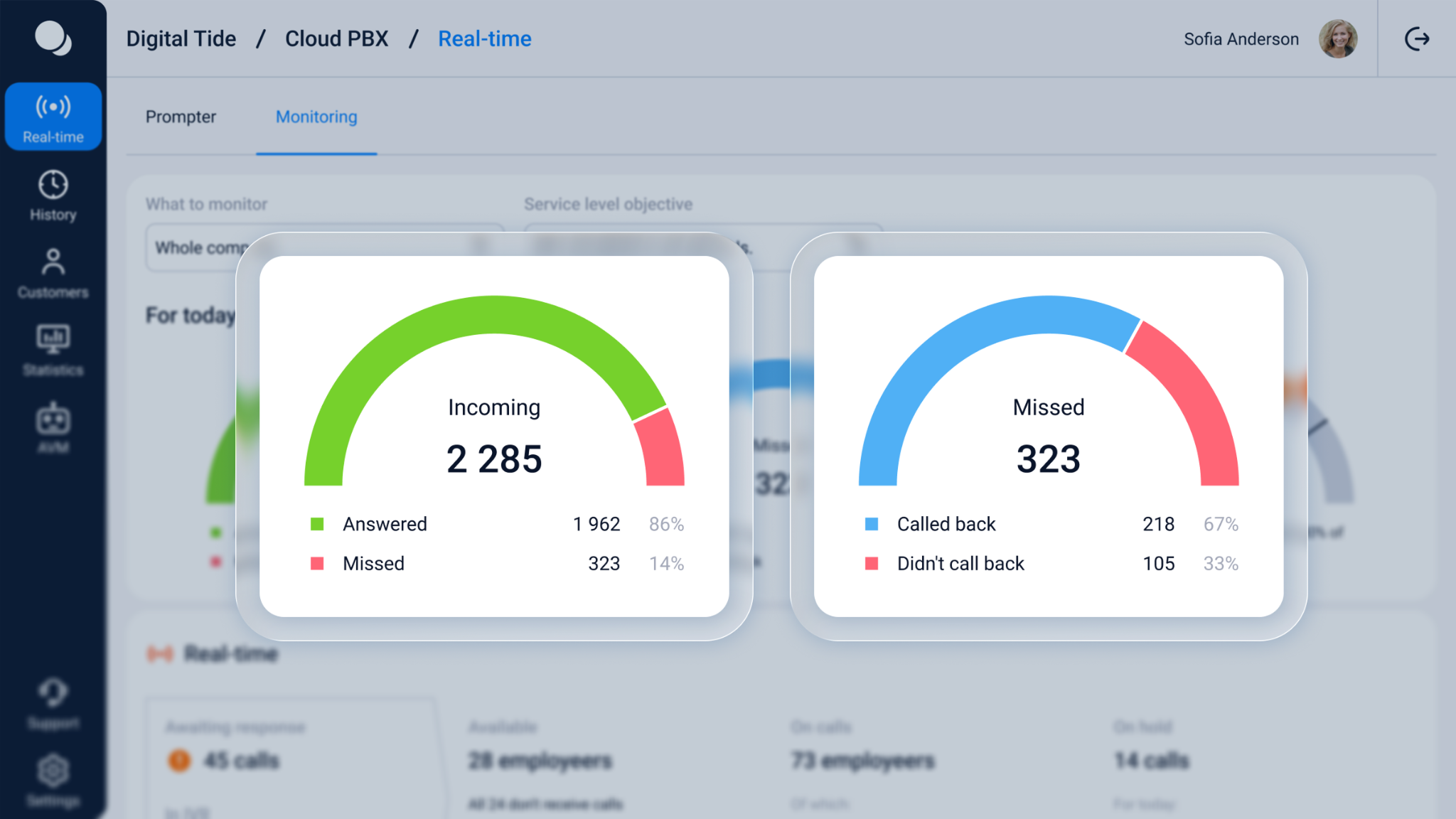
For a firm with satellite offices in Cape Town, Johannesburg, and Durban, this is the only way to know whether the Durban office is actually picking up the phone. Statistics reports on top of the live view give the firm a monthly picture: call volumes by day, pickup rates by attorney, and the numbers that ring longest before being answered.
Firms that see this dashboard for the first time typically discover a problem they did not know they had. That is the moment the deal closes.
The objection. You will not get one on this feature. If the pitch has gone well by this point, this is where the partner asks about price.
Law firms buy differently from other SMEs. Understand this before you quote.
Per-seat or per-attorney, not per-user. Firms think in headcount of billable staff. A twelve-person firm might have eight attorneys and four support staff. Quote per attorney with support staff bundled at a discount, or per full seat if that is your standard model. Do not quote a mixed rate that requires the partner to do arithmetic during your call.
Bundle recording as standard, not upsell. For legal, recording is a core requirement, not a premium feature. Firms that see it broken out as an add-on assume you do not understand the vertical. Put it in the base package and price accordingly.
Contract terms matter more than monthly rate. Firms prefer annual contracts with predictable pricing over month-to-month with lower entry rates. This is opposite to how retail or hospitality buys. Lead with the annual quote and mention monthly only if pushed.
Volume tiers should reflect firm structure. Small firm (up to five attorneys), mid-size firm (five to twenty), large firm (twenty plus). Do not use SME-generic tiers based on total users. Attorneys are the buying unit.
Add a compliance and audit package as a premium tier. For firms that need enhanced audit logging, longer retention periods, or dedicated support, price it as a separate tier. Larger firms will buy it. This is where the margin lives.
Send a written follow-up within twenty-four hours. Attach the screenshots you showed. Include a one-page summary of the four points above, tailored to the partner's reactions. Do not send a generic proposal.
Firms that ask the most technical questions are usually the fastest to buy. They are checking whether you understand their work. Answer plainly, show the screens, and let the platform close itself.
Digital Tide's white-label model means you sell all of the above under your own brand, with your own pricing, on your own billing infrastructure. Partners you close never know Digital Tide exists. That is by design. Your customers relationship stays with you
Legal is a vertical where operators win by understanding the business, not by demoing features.
Four things close the deal: proving the firm is losing billable revenue to unlogged calls, showing attorneys can work from anywhere without exposing personal numbers, handling compliance and recording without leading with regulation, and giving firm management visibility they have never had before.
Price legal per attorney, bundle recording as standard, and lead with annual contracts.
Firms that ask the hardest technical questions close the fastest, because what they are really checking is whether you understand their work. Get that right, and the platform sells itself.



.png)
Law firms are one of the highest-margin SME verticals a telecom operator can sell into. They are not price-sensitive the way retail or hospitality is. They are value-sensitive. When a managing partner sees how much billable revenue the current phone system is losing, price becomes a secondary conversation.
But legal is also a vertical where a bad pitch fails fast. Partners are trained to spot vague claims. They will not sit through a demo of features they do not care about. The BD reps who close law firm deals are the ones who walk in already understanding how a firm makes money, where revenue leaks, and what the compliance stakes are.
This is the playbook. Four things a law firm cares about, how to raise each one in the discovery call, which part of the Digital Tide platform to show, and the objection you will get every time.
What the firm cares about. According to the Legal Trends Report, lawyers spend only 2.5 hours of their working day on billable tasks. The rest goes to admin, communication, and time they never log. The single biggest leak is the unlogged call — an attorney takes fifteen minutes from a client on the drive home, means to log it, forgets by morning. Across eight attorneys and a working week, that is twenty billable hours quietly written off.
How to sell it. Open the discovery call with this question:
How does the firm currently log billable time from phone calls?
If the answer involves attorneys writing it down at end of day, you have the pitch. That firm is losing revenue every week and the managing partner probably suspects it but has no way to prove it.
Pull up the CRM integration screen on your laptop. Digital Tide integrates natively with Kommo, Pipedrive, Salesforce, and most CRM systems firms use for intake and matter management. Every call, incoming, outgoing, missed, is logged against the client record automatically. Duration, timestamp, which attorney handled it, whether it was returned.
Then run the math out loud. A ten-attorney firm billing at $250 an hour that recovers one billable hour per attorney per week is looking at $130,000 a year they were not capturing before. Say the number. Watch the room shift.
The objection. Does it work with the CRM we already use? If it is on the native list, integration is a settings toggle. If not, the API handles it. Either way, the answer is yes. Do not promise a timeline unless you have checked with the Digital Tide integration team first.
What the firm cares about. Attorneys work from three places: the office, the courthouse, and everywhere else. Being reachable used to mean handing out a personal mobile number to key clients. That blurs the professional line and, more importantly, moves privileged client communication off the firm's official channels. That is a real compliance exposure, and partners know it.
How to sell it. Ask this in the discovery call:
What happens when a client calls the office and the attorney they need is in court?
If the answer is "the receptionist takes a message and emails it," you have the pitch. The firm is losing time-sensitive client communication every single day.
Show the mobile app. An attorney makes a call from Digital Tide's mobile app on their personal phone, and the client sees the firm's office number. Voicemails route to the firm's system. Recordings are captured under the firm's account, not scattered across seven personal devices.
What the firm cares about. Client disputes hinge on what was said. Notes taken during a call are a lawyer's word against the client's. Recordings are evidence.
Beyond disputes, firms operating under POPIA in South Africa, GDPR in the EU, PDPPL in Qatar, or the equivalent frameworks in other markets need auditable proof of how privileged communication is handled. Regulators do not ask to hear the recording. They ask for the audit trail.
How to sell it. Ask this in the discovery call:
Is the firm recording client calls today, and where are the recordings stored?
This one is important — it surfaces the compliance conversation without you leading with regulation, which partners often find patronising when it comes from a telco.
Show the call recording settings screen. Digital Tide's controls let the firm define policy at the system level: record all external calls, record only calls with specific clients, or record on demand. Recordings are encrypted at rest and stored in the firm's tenant. The system plays a notification message before recording begins, which handles two-party consent requirements in most jurisdictions.
Then flag the audit logs. Admin logs show who accessed which recording, when, and what they did with it. That is the paperwork a compliance officer needs when a regulator asks.
Business continuity is worth adding in markets with unstable infrastructure. If the office loses power or connectivity, calls automatically redirect to attorneys' mobile devices. In markets where load-shedding or fiber cuts are weekly, this is not a nice-to-have; it is the whole reason to switch. Lead with this when selling in South Africa, Nigeria, Pakistan, or anywhere the power is unreliable.
The objection. Where exactly are the recordings stored, and who has access? Know the answer for your specific deployment before the call. If you are hosting locally, name the data center. If Digital Tide is hosting for you, know the region. Partners will ask this, and a vague answer kills trust.
What the firm cares about. Most managing partners cannot tell you, right now, how many client calls the firm missed yesterday. They can guess. They cannot count. This is the pitch that lands with partners who run the firm as a business.
How to sell it. Ask this in the discovery call:
How many client calls does the firm miss outside office hours?
Most firms have no idea. That itself is the opening.
Show the real-time monitoring dashboard. The firm's operations manager sees live call activity across every office: incoming calls, missed calls, average pickup time, which attorneys are on calls, which are available. The service level metric shows the percentage of client calls answered within the target time.
For a firm with satellite offices in Cape Town, Johannesburg, and Durban, this is the only way to know whether the Durban office is actually picking up the phone. Statistics reports on top of the live view give the firm a monthly picture: call volumes by day, pickup rates by attorney, and the numbers that ring longest before being answered.
Firms that see this dashboard for the first time typically discover a problem they did not know they had. That is the moment the deal closes.
The objection. You will not get one on this feature. If the pitch has gone well by this point, this is where the partner asks about price.
Law firms buy differently from other SMEs. Understand this before you quote.
Per-seat or per-attorney, not per-user. Firms think in headcount of billable staff. A twelve-person firm might have eight attorneys and four support staff. Quote per attorney with support staff bundled at a discount, or per full seat if that is your standard model. Do not quote a mixed rate that requires the partner to do arithmetic during your call.
Bundle recording as standard, not upsell. For legal, recording is a core requirement, not a premium feature. Firms that see it broken out as an add-on assume you do not understand the vertical. Put it in the base package and price accordingly.
Contract terms matter more than monthly rate. Firms prefer annual contracts with predictable pricing over month-to-month with lower entry rates. This is opposite to how retail or hospitality buys. Lead with the annual quote and mention monthly only if pushed.
Volume tiers should reflect firm structure. Small firm (up to five attorneys), mid-size firm (five to twenty), large firm (twenty plus). Do not use SME-generic tiers based on total users. Attorneys are the buying unit.
Add a compliance and audit package as a premium tier. For firms that need enhanced audit logging, longer retention periods, or dedicated support, price it as a separate tier. Larger firms will buy it. This is where the margin lives.
Send a written follow-up within twenty-four hours. Attach the screenshots you showed. Include a one-page summary of the four points above, tailored to the partner's reactions. Do not send a generic proposal.
Firms that ask the most technical questions are usually the fastest to buy. They are checking whether you understand their work. Answer plainly, show the screens, and let the platform close itself.
Digital Tide's white-label model means you sell all of the above under your own brand, with your own pricing, on your own billing infrastructure. Partners you close never know Digital Tide exists. That is by design. Your customers relationship stays with you
Legal is a vertical where operators win by understanding the business, not by demoing features.
Four things close the deal: proving the firm is losing billable revenue to unlogged calls, showing attorneys can work from anywhere without exposing personal numbers, handling compliance and recording without leading with regulation, and giving firm management visibility they have never had before.
Price legal per attorney, bundle recording as standard, and lead with annual contracts.
Firms that ask the hardest technical questions close the fastest, because what they are really checking is whether you understand their work. Get that right, and the platform sells itself.
Law firms are one of the highest-margin SME verticals a telecom operator can sell into. They are not price-sensitive the way retail or hospitality is. They are value-sensitive. When a managing partner sees how much billable revenue the current phone system is losing, price becomes a secondary conversation.
But legal is also a vertical where a bad pitch fails fast. Partners are trained to spot vague claims. They will not sit through a demo of features they do not care about. The BD reps who close law firm deals are the ones who walk in already understanding how a firm makes money, where revenue leaks, and what the compliance stakes are.
This is the playbook. Four things a law firm cares about, how to raise each one in the discovery call, which part of the Digital Tide platform to show, and the objection you will get every time.

What the firm cares about. According to the Legal Trends Report, lawyers spend only 2.5 hours of their working day on billable tasks. The rest goes to admin, communication, and time they never log. The single biggest leak is the unlogged call — an attorney takes fifteen minutes from a client on the drive home, means to log it, forgets by morning. Across eight attorneys and a working week, that is twenty billable hours quietly written off.
How to sell it. Open the discovery call with this question:
How does the firm currently log billable time from phone calls?
If the answer involves attorneys writing it down at end of day, you have the pitch. That firm is losing revenue every week and the managing partner probably suspects it but has no way to prove it.
Pull up the CRM integration screen on your laptop. Digital Tide integrates natively with Kommo, Pipedrive, Salesforce, and most CRM systems firms use for intake and matter management. Every call, incoming, outgoing, missed, is logged against the client record automatically. Duration, timestamp, which attorney handled it, whether it was returned.
Then run the math out loud. A ten-attorney firm billing at $250 an hour that recovers one billable hour per attorney per week is looking at $130,000 a year they were not capturing before. Say the number. Watch the room shift.
The objection. Does it work with the CRM we already use? If it is on the native list, integration is a settings toggle. If not, the API handles it. Either way, the answer is yes. Do not promise a timeline unless you have checked with the Digital Tide integration team first.
What the firm cares about. Attorneys work from three places: the office, the courthouse, and everywhere else. Being reachable used to mean handing out a personal mobile number to key clients. That blurs the professional line and, more importantly, moves privileged client communication off the firm's official channels. That is a real compliance exposure, and partners know it.
How to sell it. Ask this in the discovery call:
What happens when a client calls the office and the attorney they need is in court?
If the answer is "the receptionist takes a message and emails it," you have the pitch. The firm is losing time-sensitive client communication every single day.
Show the mobile app. An attorney makes a call from Digital Tide's mobile app on their personal phone, and the client sees the firm's office number. Voicemails route to the firm's system. Recordings are captured under the firm's account, not scattered across seven personal devices.
What the firm cares about. Client disputes hinge on what was said. Notes taken during a call are a lawyer's word against the client's. Recordings are evidence.
Beyond disputes, firms operating under POPIA in South Africa, GDPR in the EU, PDPPL in Qatar, or the equivalent frameworks in other markets need auditable proof of how privileged communication is handled. Regulators do not ask to hear the recording. They ask for the audit trail.
How to sell it. Ask this in the discovery call:
Is the firm recording client calls today, and where are the recordings stored?
This one is important — it surfaces the compliance conversation without you leading with regulation, which partners often find patronising when it comes from a telco.
Show the call recording settings screen. Digital Tide's controls let the firm define policy at the system level: record all external calls, record only calls with specific clients, or record on demand. Recordings are encrypted at rest and stored in the firm's tenant. The system plays a notification message before recording begins, which handles two-party consent requirements in most jurisdictions.
Then flag the audit logs. Admin logs show who accessed which recording, when, and what they did with it. That is the paperwork a compliance officer needs when a regulator asks.
Business continuity is worth adding in markets with unstable infrastructure. If the office loses power or connectivity, calls automatically redirect to attorneys' mobile devices. In markets where load-shedding or fiber cuts are weekly, this is not a nice-to-have; it is the whole reason to switch. Lead with this when selling in South Africa, Nigeria, Pakistan, or anywhere the power is unreliable.
The objection. Where exactly are the recordings stored, and who has access? Know the answer for your specific deployment before the call. If you are hosting locally, name the data center. If Digital Tide is hosting for you, know the region. Partners will ask this, and a vague answer kills trust.
What the firm cares about. Most managing partners cannot tell you, right now, how many client calls the firm missed yesterday. They can guess. They cannot count. This is the pitch that lands with partners who run the firm as a business.
How to sell it. Ask this in the discovery call:
How many client calls does the firm miss outside office hours?
Most firms have no idea. That itself is the opening.
Show the real-time monitoring dashboard. The firm's operations manager sees live call activity across every office: incoming calls, missed calls, average pickup time, which attorneys are on calls, which are available. The service level metric shows the percentage of client calls answered within the target time.
For a firm with satellite offices in Cape Town, Johannesburg, and Durban, this is the only way to know whether the Durban office is actually picking up the phone. Statistics reports on top of the live view give the firm a monthly picture: call volumes by day, pickup rates by attorney, and the numbers that ring longest before being answered.
Firms that see this dashboard for the first time typically discover a problem they did not know they had. That is the moment the deal closes.
The objection. You will not get one on this feature. If the pitch has gone well by this point, this is where the partner asks about price.

Law firms buy differently from other SMEs. Understand this before you quote.
Per-seat or per-attorney, not per-user. Firms think in headcount of billable staff. A twelve-person firm might have eight attorneys and four support staff. Quote per attorney with support staff bundled at a discount, or per full seat if that is your standard model. Do not quote a mixed rate that requires the partner to do arithmetic during your call.
Bundle recording as standard, not upsell. For legal, recording is a core requirement, not a premium feature. Firms that see it broken out as an add-on assume you do not understand the vertical. Put it in the base package and price accordingly.
Contract terms matter more than monthly rate. Firms prefer annual contracts with predictable pricing over month-to-month with lower entry rates. This is opposite to how retail or hospitality buys. Lead with the annual quote and mention monthly only if pushed.
Volume tiers should reflect firm structure. Small firm (up to five attorneys), mid-size firm (five to twenty), large firm (twenty plus). Do not use SME-generic tiers based on total users. Attorneys are the buying unit.
Add a compliance and audit package as a premium tier. For firms that need enhanced audit logging, longer retention periods, or dedicated support, price it as a separate tier. Larger firms will buy it. This is where the margin lives.
Send a written follow-up within twenty-four hours. Attach the screenshots you showed. Include a one-page summary of the four points above, tailored to the partner's reactions. Do not send a generic proposal.
Firms that ask the most technical questions are usually the fastest to buy. They are checking whether you understand their work. Answer plainly, show the screens, and let the platform close itself.
Digital Tide's white-label model means you sell all of the above under your own brand, with your own pricing, on your own billing infrastructure. Partners you close never know Digital Tide exists. That is by design. Your customers relationship stays with you
Legal is a vertical where operators win by understanding the business, not by demoing features.
Four things close the deal: proving the firm is losing billable revenue to unlogged calls, showing attorneys can work from anywhere without exposing personal numbers, handling compliance and recording without leading with regulation, and giving firm management visibility they have never had before.
Price legal per attorney, bundle recording as standard, and lead with annual contracts.
Firms that ask the hardest technical questions close the fastest, because what they are really checking is whether you understand their work. Get that right, and the platform sells itself.
Únase a nuestro boletín: actualizaciones sencillas y útiles sobre telecomunicaciones y PBX en la nube
Actualizaciones sencillas y útiles sobre telecomunicaciones y PBX en la nube
Actualizaciones sencillas y útiles sobre telecomunicaciones y PBX en la nube